
Zones of Regulation
The Zones of Regulation is a simple, child-friendly framework that helps children identify how they’re feeling and learn strategies to manage their emotions. At Mulbarton Primary School it is used to develop a shared language to talk about feelings, attention, and self-control.
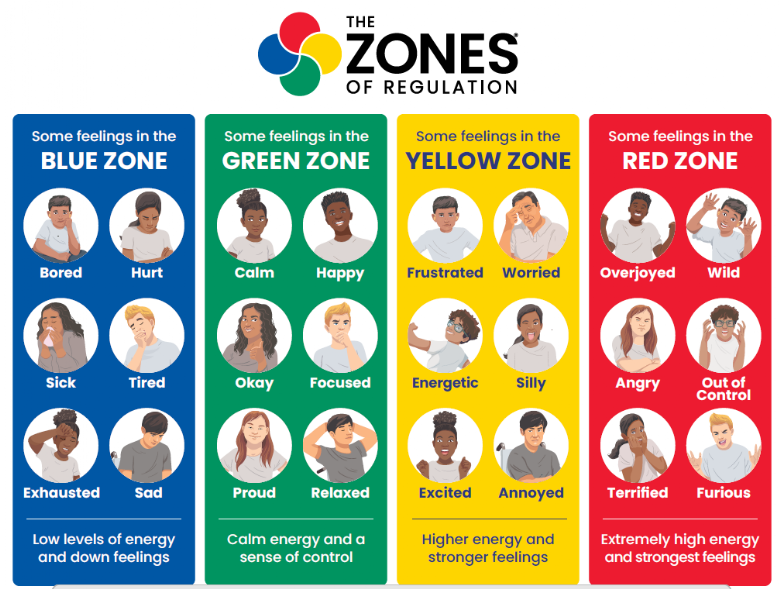
The Four Zones
Blue Zone – Low-Energy Emotions
The Blue Zone includes feelings such as sadness, tiredness, boredom, or feeling unwell.
Children may move more slowly or seem less focused.
Helpful Tools: rest, a snack, a quiet break, gentle movement, talking with a trusted adult.
Green Zone – Calm and Ready to Learn
This is the ideal zone for learning. It includes feelings such as calm, focused, happy, or content. Being in the Green Zone doesn’t mean “perfect”—it simply means children feel regulated and ready for what’s next.
Helpful Tools: routines, positive encouragement, mindfulness, good sleep.
Yellow Zone – Heightened Emotions (Still in Control)
The Yellow Zone includes feelings such as frustration, silliness, anxiety, excitement, or nervousness. Children are still in control, but their energy is elevated.
Helpful Tools: deep breathing, movement breaks, fidget tools, discussing the feeling, planning ahead.
Red Zone – Intense Emotions (Loss of Control)
The Red Zone involves very strong feelings such as anger, fear, panic, or feeling out of control. Children may shout, cry, or shut down. The goal is not to avoid the Red Zone but to learn safe strategies for calming down.
Helpful Tools: space to cool off, grounding techniques, calm-down routines, supportive adult guidance.
A Whole-School Approach to the Zones of Regulation
At Mulbarton Primary School we deliver the Zones of Regulation as a whole-school curriculum, meaning every class and year group learns the same vocabulary, strategies, and expectations. This consistent approach helps children develop emotional regulation skills in a predictable and supportive environment.
A whole-school Zones curriculum typically includes:
- Explicit weekly lessons on identifying feelings, understanding triggers, noticing body signals, and choosing appropriate regulation tools.
- Shared language across all staff, so children hear the same reminders, prompts, and terminology from every adult in the building. Adults will often label their own feelings linked to the zones supported by zones visuals on lanyards.
- Visual supports in classrooms and shared areas to help children recognise their current Zone independently. Every classroom has a Zones of Regulation display and a Calm Corner.
- Opportunities to practise strategies daily, such as breathing exercises, movement breaks, mindfulness, and reflection time.
- A focus on emotional literacy, helping children understand not just what they are feeling, but why, and what they can do about it. Alongside, children are taught to recognise their own body's feelings linked to emotions.
- Celebration of self-regulation progress, emphasising that regulation is a skill that grows with time and practice.
A whole-school model ensures that children learn consistent strategies year after year, helping them develop long-term emotional resilience and confidence. It also means that children who may struggle with big feelings receive the same supportive language and tools from classroom teachers, lunchtime staff, specialist teachers, and senior leaders.
Intervention
Alongside the whole school Zones of Regulation curriculum, some children will access the programme as a targeted intervention within our nurture group. These children will engage weekly with an in depth group session with practical activities linked to the zones lessons.
Why the Zones Matter
The Zones teach children that all feelings are normal—there are no “good” or “bad” zones. Instead, the focus is on recognising which zone they are in and choosing a tool that helps them manage it safely. Over time, this builds emotional awareness, communication skills, and independence.
How Parents Can Help at Home
- Use the language of the Zones: “What Zone are you in right now?” or “What might help you return to the Green Zone?”
- Model your own Zones: “I’m in the Yellow Zone because I’m running late. I’m going to take some deep breaths.”
- Create a calm-down space: A small area with soft items, breathing prompts, or sensory tools can help children reset.
- Practise strategies when your child is calm: It’s easier to learn tools before big feelings arrive.
- Celebrate effort, not perfection: Regulation skills grow with time, patience, and regular practice.